


The History of St Ninian's Isle – Shetland's Iconic Tombolo and Ancient Treasure
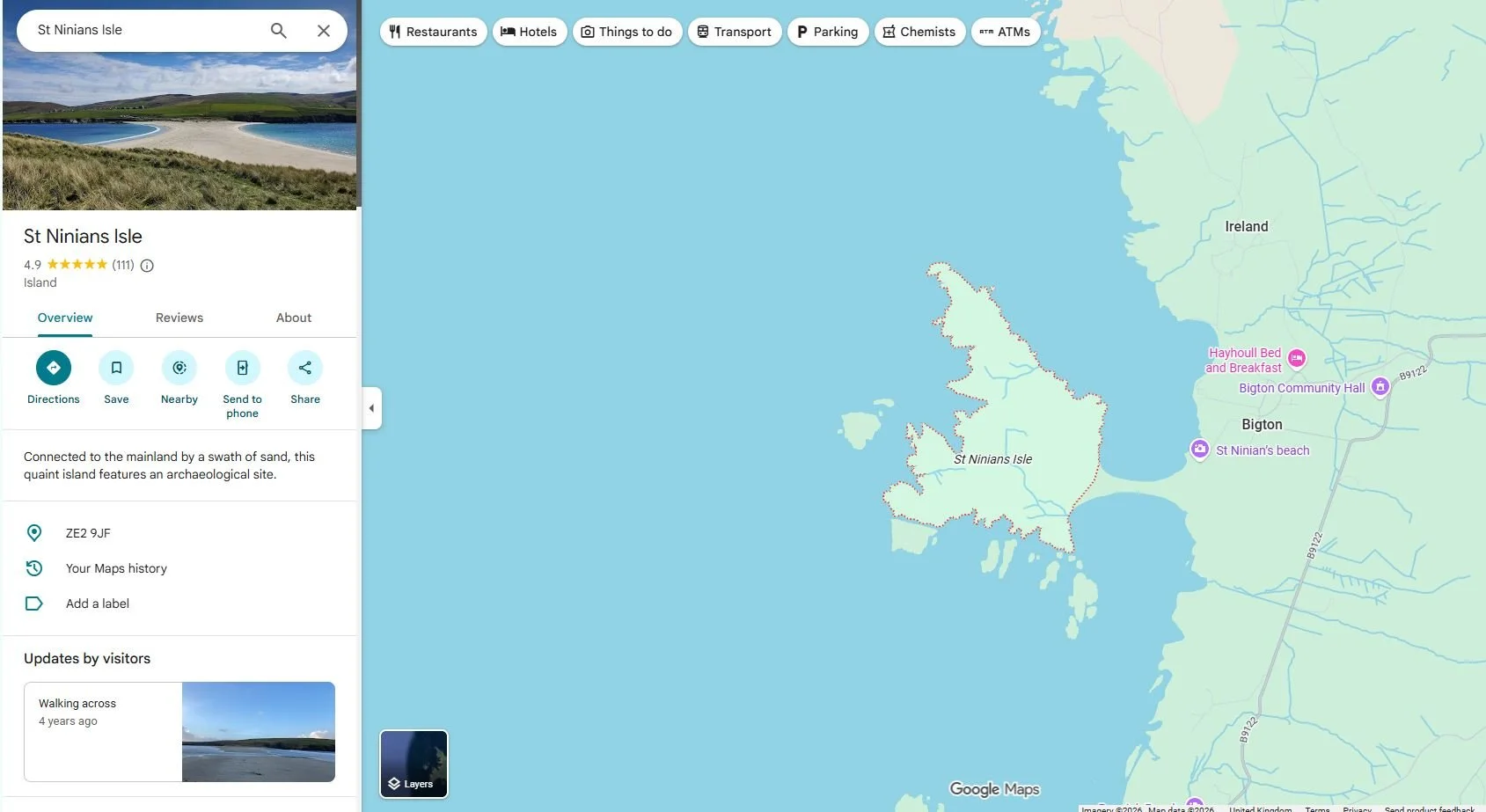
Few places in Shetland capture the imagination quite like St Ninian's Isle. Connected to the South Mainland by the UK's largest active sand tombolo, this stunning stretch of shell-sand beach is one of the most photographed locations in Scotland. Visitors are drawn by the crystal-clear waters, dramatic coastal scenery, and the unique natural formation that links the island to the mainland.
While many people visit for the spectacular views, the history of St Ninian's Isle is every bit as fascinating as its landscape.
A Landscape Shaped by Time
The famous tombolo, a 500-metre ribbon of sand connecting the island to the mainland, was formed over thousands of years as sea levels changed following the last Ice Age. Waves approaching from either side of the island gradually deposited shell sand, creating the remarkable double-sided beach we see today.
The tombolo remains an active geological feature, constantly reshaped by the powerful Atlantic weather that characterises Shetland. During winter storms the beach can narrow dramatically, while calmer summer conditions rebuild the sandbanks.
Ancient Settlements and Early Christianity
Long before the arrival of Christianity, people were living on St Ninian's Isle. Archaeological investigations have revealed evidence of Iron Age occupation and burial activity dating back many centuries before the medieval chapel was built.
The island later became an important religious site. The remains of a chapel dedicated to St Ninian, one of Scotland's earliest Christian saints, still stand near the western end of the tombolo. Archaeological research suggests that Christian worship may have existed here as early as the 8th century, making it one of Shetland's most significant early Christian locations.
The Discovery That Shocked the Archaeological World
In July 1958, a local schoolboy named Douglas Coutts was assisting archaeologists excavating the chapel site when he uncovered one of the most important archaeological discoveries ever made in Scotland.
Hidden beneath a stone slab in the chapel floor was a remarkable hoard of silver objects now known as the St Ninian's Isle Treasure. Dating from around AD 750–825, the collection includes silver brooches, bowls, sword fittings and other finely crafted objects associated with the Picts.
Many historians believe the treasure may have been hidden to protect it from Viking raids, which were beginning to affect the Northern Isles during this period. Today, the original treasure is housed in the National Museum of Scotland, while replicas can be viewed in Shetland.
A Place of Natural Beauty
Today, St Ninian's Isle is renowned for more than its history. The tombolo has been recognised as one of Scotland's finest beaches, attracting walkers, photographers, birdwatchers and nature enthusiasts from around the world.
From the air, the symmetrical curves of the beach become even more striking. Drone photography reveals the unique shape of the tombolo, with turquoise waters on both sides and sweeping views across the South Mainland coastline.
Experience St Ninian's Isle From Above
My latest drone video, filmed using the DJI Mavic 4 Pro, showcases this extraordinary landscape from a perspective few visitors ever experience. Flying above the tombolo and surrounding coastline highlights both the natural beauty and geological significance of one of Shetland's most iconic landmarks.
Watch the video and explore more Shetland photography, drone footage and local history here on Edge of Shetland.
Sources
St Ninian's Tombolo – Shetland Visitor Information: Shetland.org St Ninian's Isle Tombolo (Shetland.org)
Geological history of the tombolo: Scottish Geology Trust – St Ninian's Tombolo (Scottish Geology Trust)
Archaeological research and the St Ninian's Isle Treasure: University of Glasgow Archaeology – St Ninian's Isle Project (University of Glasgow)
Shetland archaeology overview: Archaeology Shetland – Site in Focus: St Ninian's Isle (archaeologyshetland)